Written by Jillian Shaw | September 17, 2023
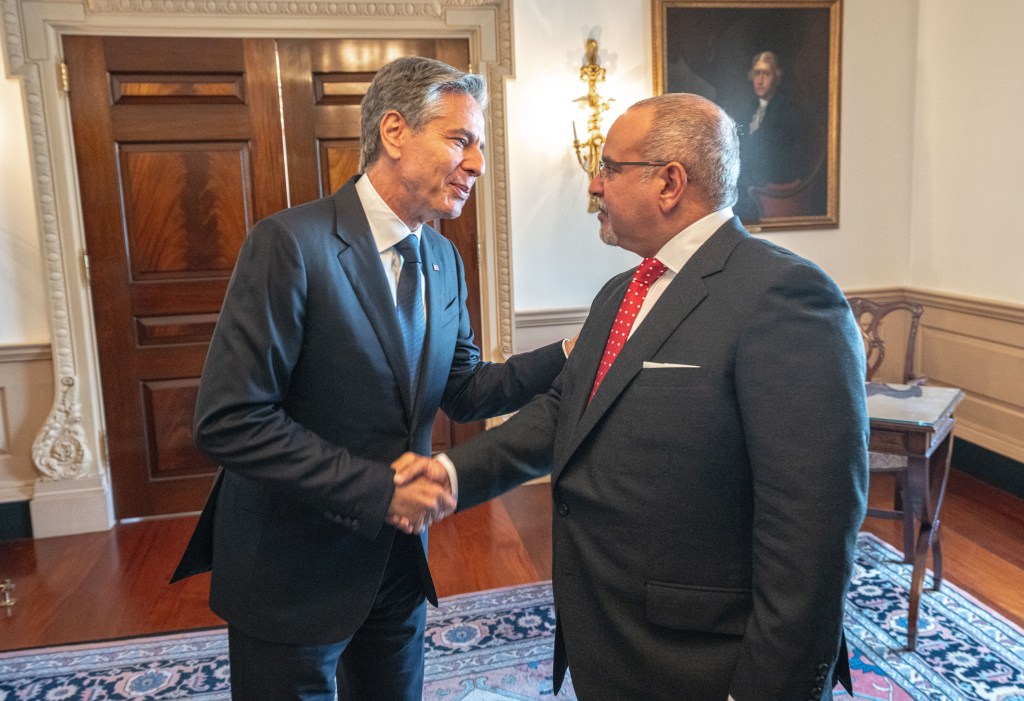
WASHINGTON — Bahrain’s Crown Prince Salman bin Hamad Al-Khalifa signed a bilateral agreement this Wednesday with Secretary of State Antony Blinken after almost a year of negotiation. This agreement, the Comprehensive Security Integration and Prosperity Agreement, focuses primarily on defense contracts, infrastructure plans, and intelligence sharing, and confirms U.S. interest in Bahrain as a solid Arab-state ally. This agreement also includes details of the new trade route spanning between India and Europe that was announced only last week by President Biden at the G-20 summit in New Delhi, and how Bahrain will be involved with the building. This agreement is considered to be legally binding under international law but is not a treaty and, therefore, does not need to be signed by Congress.
The primary function of this agreement is to formalize the defense relationship between the U.S. and Bahrain. While this agreement is not as strong as treaties like NATO that codify mutual defense expectations for one state to strike on behalf of the other, it successfully strengthens ties between the two nations regarding defense plans and frameworks in the Gulf.
The agreement also further emphasizes the U.S. Navy’s strategically placed Fifth Fleet, as well as the U.S. Naval Forces Central Command, which gives U.S. naval forces direct access to the Gulf through their location in Bahrain. It also does not outline any weapon sales between the two nations but furthered defense interdependence almost guarantees that Bahrain, which already purchases large amounts of U.S. defense equipment, will continue to buy from the U.S.
This agreement is just the next step in a current line of U.S. agreements made with the Middle East, and will likely be the inspiration for future defense agreements in the region. “We’re looking forward to using this agreement as a framework for additional countries that may wish to join us in strengthening regional stability, economic cooperation, and technological innovation,” said Secretary Blinken before the signing ceremony.
Additionally, this agreement leads the U.S. closer to Saudi Arabia by distinctly allying itself with a neighboring Arab state. Saudi Arabia is likely the next goal for U.S. foreign policy to get to sign onto the Abraham Accords, Arab-Israeli peace settlements from the Trump administration, and C-SIPA’s future success and growth could likely help convince Saudia Arabia.
Further agreements with Arab states also increase U.S. positive influence in the region and force Chinese, Russian, and notably Iranian power further out. Bahrain has a complicated history with Iran, and continued allyship between the U.S. and Bahrain can be a deterrent and an opponent to Iran’s “ongoing aggression,” according to an anonymous Biden administration official.
 The Patterson Journal of International Affairs
Leave a comment