Written by Jillian Shaw | September 24, 2023
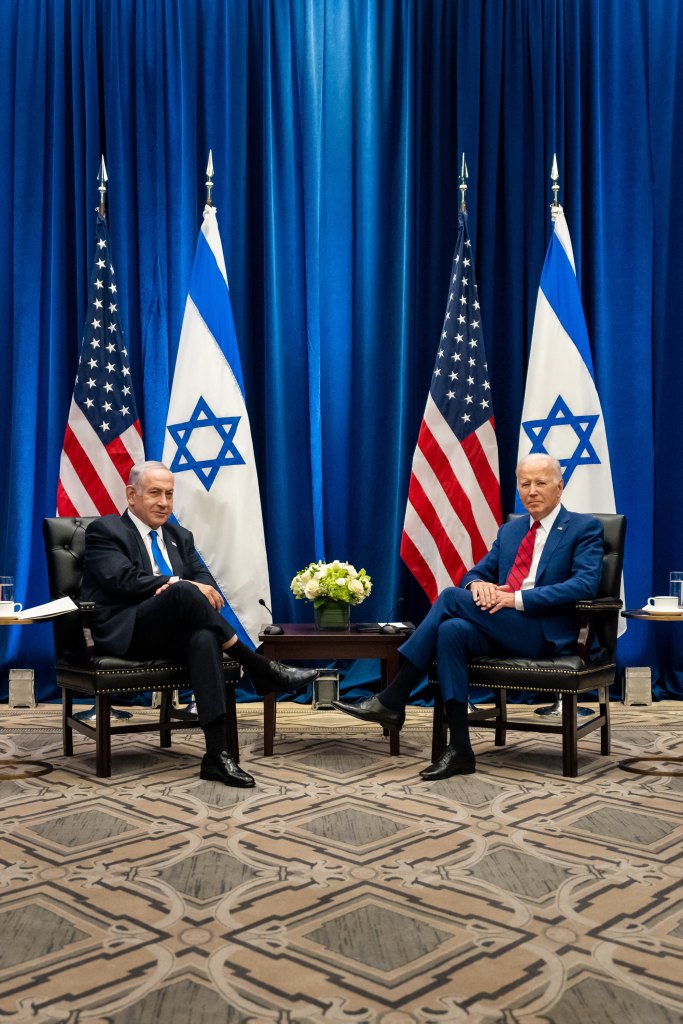
UNITED NATIONS — Israeli Prime Minister Benjamin Netanyahu addressed the United Nations General Assembly on Friday morning with goals of Israeli-Arab cooperation. The speech, given during the General Debate of the 78th session of the UN, prioritized how vital a deal between Israel and Saudi Arabia would be for creating a “New Middle East.” Netanyahu proclaimed that a deal between Israel and Saudi Arabia is very close to being finalized, as both states have worked together and with the United States for months to create this pact. This deal is also set to follow the 2020 Abraham Accords, which made peace deals between Israel and four Arab states, with the new pact making Saudi Arabia the fifth.
During his speech, Netanyahu spoke while using a visual aid to depict the previous and current versions of the Middle East and Israel. He first showed a map of the region in 1948 when Israel was established, which showed how it was a “tiny country, isolated, surrounded by a hostile Arab world.” He then switched placards to show the “New Middle East”, which highlights Arab nations that have peace with Israel in green, making Israel surrounded by allies instead of opponents.
Notably, the maps used by Netanyahu show no mention of Palestine. Netanyahu discussed Palestine frequently during his 25-minute speech, describing how he believes he has tried to cooperate with them previously. Assumedly recognizing Palestine’s presence as a UN Observer State, Netanyahu states that Palestine should not have the ability to block any peace deals made between Israel and other Arab nations, specifically stating that “they should be part of the process, but they should not have a veto over the process.” This statement in addition to the absence of Palestine from the maps did not go unnoticed and many Palestinian and Arab leaders spoke about the assumed hypocrisy of the statement. The Palestinian ambassador to Germany took to X, writing that Netanyahu’s address was an “insult to every foundational principle of the United Nations” and Netanyahu spoke about peace while simultaneously “entrenching the longest ongoing belligerent occupation in today’s world.”
Despite this depiction of Palestine, Saudi Arabia and the U.S. have both pushed for Palestine’s involvement in these Middle Eastern peace deals, as well as for eventual Israel-Palestine peace. In the Saudi Arabian Foreign Minister’s speech to the UNGA on Saturday, Israel or the peace deals themselves were not explicitly mentioned, but a “comprehensive solution to the Palestinian issue” was highlighted as a necessity for Middle Eastern peace.
Additionally, Netanyahu’s speech reiterates his views on Iran as a threat and a common enemy between Israel and other Arab states. Netanyahu has spoken on multiple occasions about how Iran should not be allowed to develop nuclear weapons, as he believes they have been attempting to do for years, and that “credible military threat” must be used internationally.
 The Patterson Journal of International Affairs
Leave a comment