Written by Connor Foster | March 4, 2024
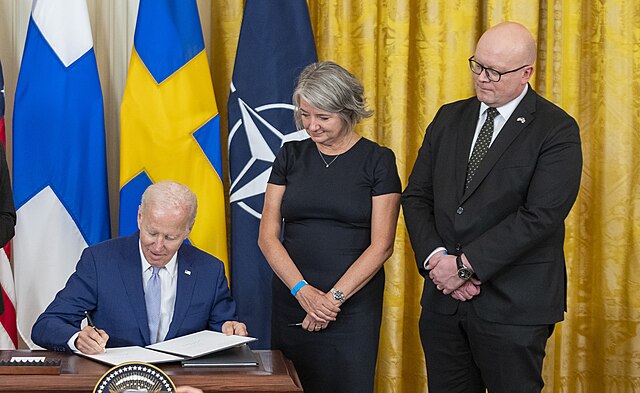
Signing of the Instruments of Ratification approving Finland and Sweden’s membership in NATO.
NATO secured a win this past Monday when Hungary officially approved Sweden’s bid to join the alliance. After nearly 200 years of remaining neutral, Russia’s invasion of Ukraine in 2022 decisively pushed Sweden towards the Western alliance. Hungary and Turkey were the last holdouts on Sweden’s accession, citing concerns regarding Sweden’s security cooperation and leniency with terrorist groups. After securing Turkey’s vote, Swedish Prime Minister Kristersson lobbied with Hungarian leader Viktor Orban, ultimately promising to supply Hungary with four fighter jets if allowed to join. This progress is occurring during a key point in the war in Ukraine, with Russian troops accelerating their success and Western popular support dwindling. It is becoming more difficult to prioritize aid for Ukraine in light of the domestic political and economic issues occurring in the U.S. and Western Europe.
Russia has stated that it will take the necessary militaristic and technical steps to counteract the perceived threat of yet another geographically close country joining NATO. The looming tension in Europe has caused Swedish government officials to make statements warning the country to prepare for war. This ominous warning alludes to the vulnerability that permeates Sweden’s infrastructure and the extensive foreign ownership of enterprises throughout the country. Private companies, both foreign and domestic, have led the trend of prioritizing profit over safety for the public infrastructure the companies have acquired. Additionally, Sweden has allowed adversarial countries to control vital companies and industries within the country. For example, China has significant stakes in Swedish infrastructure and its energy sector, both of which are vital to national security. It appears that the war in Ukraine combined with the country’s new NATO status may compel Sweden to deepen its national security abilities and make the private sector less dependent on foreign-owned companies.
 The Patterson Journal of International Affairs
Leave a comment