By Connor Foster
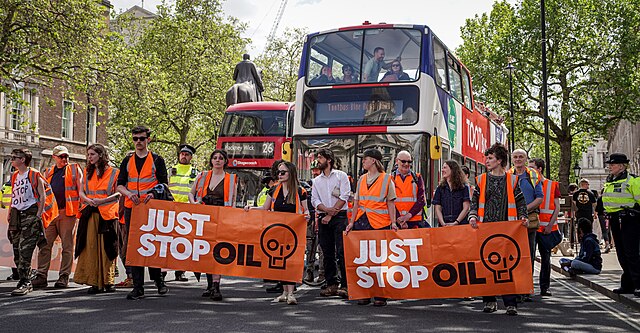
Debates over climate change are ramping up in the United Kingdom as policy seems to be supporting climate activists in some cases and cracking down on protests in others. In July, four people from the group Just Stop Oil were found guilty of “conspiring intentionally to cause a public nuisance” after encouraging protestors to disrupt traffic on a major road around London. These efforts were meant to address the government’s decision to continue drilling for oil in the North Sea. They were each sentenced to 4 years in jail, a sentence that was enabled by two new laws that empower police to implement harsher punishments on protests even if they are peaceful. These new laws are not only facing backlash from the British public, but also from the UN’s special rapporteur on environmental defenders who accuse the British government of violating the people’s right to peaceful protest. The defendants in this trial have almost no recourse to defend themselves in court because the judge ruled that justifying their actions by saying they are acting because of climate emergency is not a factor that the jury can take into consideration.
Large oil companies have been expanding support for their operations by donating money to think tanks and charities that have influence over the country’s environmental agenda. In exchange for the donations, these organizations, like the right-wing Policy Exchange, advocate for big oil interests in policy circles. This calls into question how closely the government is tied to big oil companies. The newly elected Labour party government has expressed the desire to stop new drilling licenses and has taken other actions in slowing environmentally harmful extractive operations. For example, after the new government rescinded support for development of a new coal mine, a judge officially ruled against the plan. This is being hailed as a huge victory for climate groups, however, the Labour party has of yet made no efforts to strike down the two laws that enable such harsh crackdowns on protesters. The difference in how oil and coal operations have been handled can display a gap in the ability of companies to exert control over government decisions that protect their own interests. This also begs the question of what these anti-protest laws will do to the future of peaceful protests, not just in the area of climate change, but also for social issues like anti-racism or gender equality.
 The Patterson Journal of International Affairs
Leave a comment