By Lexi Dean
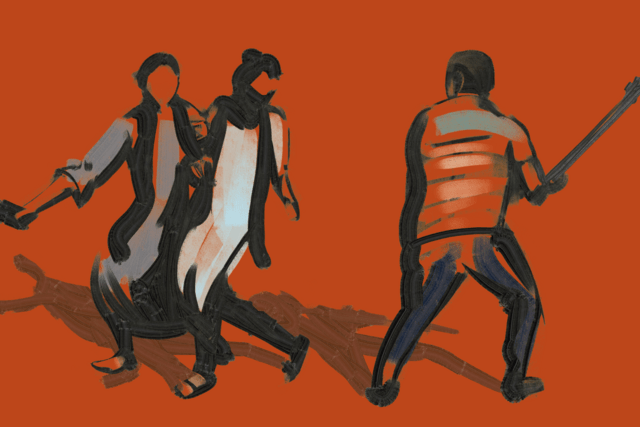
Last month university students led demonstrations that escalated into mass protests calling for the ousting of Sheikh Hasina’s rule. After fifteen years of power, the Prime Minister fled Bangladesh to India. Hasina’s government was accused of human rights abuses, beatings, and utilizing teargas, rubber bullets, and live ammunition during these protests. A major point of tension between students and Hasina’s regime was the lack of jobs for educated youths and the economic gains concentrated in a rich political class. In recent weeks it’s been reported that the garment industry, which makes up the largest part of the country’s economy, suffers amidst the disorder. Now after the collapse of Hasina’s regime, the country remains in a state of insecurity. The Bangladeshi police used by Hasina to commit these abuses against civilians are now largely absent from the public, fearing retribution from acting as an extension of the former ruling political party.
Muhammad Yunus took over an interim government with the goal to restore order and democracy. However, the country continues to experience uncertainty. Earlier this week, Yunus granted the military special policing powers to carry out duties such as issuing search and arrest warrants and dispersing large gatherings in response to Bangladesh’s police officers failing to function normally since the former regime’s collapse. These magisterial powers will extend for two months to try at improving law and order in the country. However, many fear that these powers will lead to stronger military influence, complete takeover, and further instability in the region. While the interim government hopes to gain control over what is occurring in the country through expanding military power, attacks and killing of students, activists, and minorities continue.
 The Patterson Journal of International Affairs
Leave a comment