By Abigail BeDard
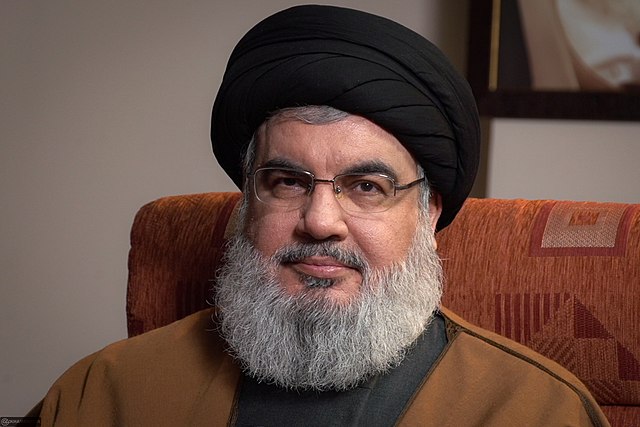
Hezbollah confirmed in a statement on Saturday that Israeli strikes killed their longtime leader, Hassan Nasrallah on Friday, September 28th. The group stated Nasrallah, “has joined his fellow martyrs.” and emphasized their intent to, “continue the holy war against the enemy and in support of Palestine.” Nasrallah served as the leader of the Iran-backed militant group for more than 30 years.
Hours before Nasrallah’s death was announced, the Israeli Defense Forces issued a statement via X, “Following precise IDF intelligence, the IAF is currently conducting strikes on strategic terrorist targets belonging to the Hezbollah terrorist organization in the area of Beirut. Among the targets struck are weapons production facilities, buildings used to store advanced weapons and key command centers of the terrorist organization”. Around the same time, the IDF also issued a statement in Arabic and English, urging civilians in Beirut to avoid “Hezbollah assets and facilities”.
Likely anticipating backlash to conducting these strikes in civilian areas, IDF spokesperson Daniel Hagari released a statement on Saturday morning, arguing for the legitimacy of the IDF’s strikes, “Hassan Nasrallah… the senior terrorists eliminated with him, and the central headquarters they were in, were legitimate military targets under international law. Nasrallah intentionally built Hezbollah’s central headquarters under residential buildings in Dahiya, Beirut—because Hezbollah intentionally uses Lebanese civilians as human shields. While Hezbollah seeks to maximize civilian harm, Israel seeks to minimize it”. The impact on civilians in Lebanon is already staggering, with the United Nations releasing a statement on Thursday, before the most recent strikes, detailing the turmoil in Lebanon, “The escalation in recent days has killed and injured thousands, spurred mass displacement, caused extensive damage to infrastructure and instilled an unimaginable fear in the daily lives of people across the country”. Experts in the region estimate the current number of civilians displaced to be over 200,000, with over 50,000 fleeing to Syria.
Fears that a wider regional war is inevitable have only escalated with these most recent developments. The death of Nasrallah was not only a huge blow to Hezbollah, but to Iran as well, who has long relied on Hezbollah in its proxy war with Israel. Iran’s leader, Ayatollah Ali Khamenei, issued a defiant response to Nasrallah’s death, calling Iran’s proxies in the region to action and stating, “The blood of the martyr shall not go unavenged”. It is likely that Israel found one of Iran’s red lines with the killing of Nasrallah and can almost certainly expect direct retaliatory action from Iran.
 The Patterson Journal of International Affairs
Leave a comment