By William Crawford
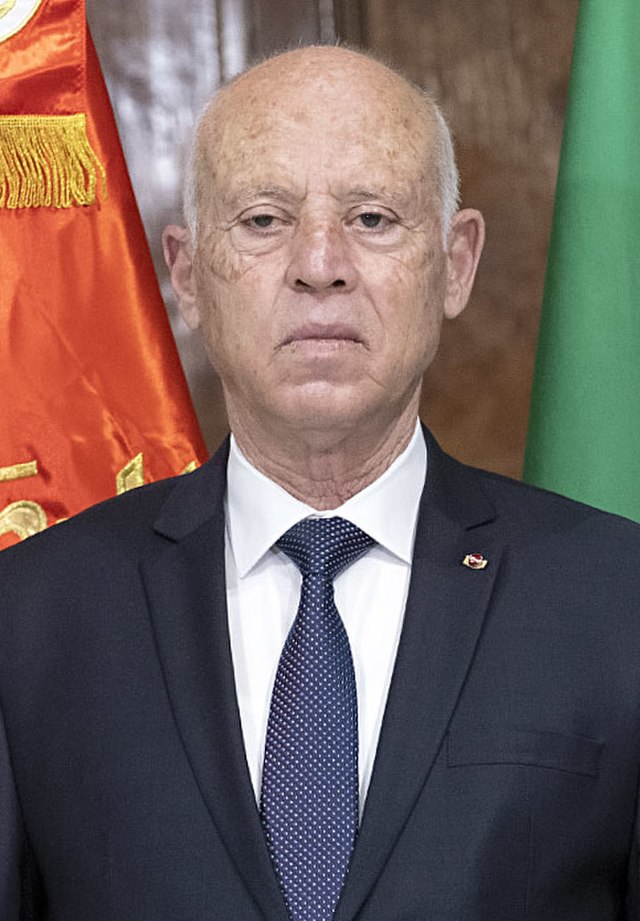
President of Tunisia Kais Saied
As part of Tunisia’s ongoing multiple electoral disputes, Tunisia’s parliament has passed a law stripping the Administrative Court of its authority over electoral matters. Believed to be the last truly independent judicial body in Tunisia, the action by Tunisia’s parliament comes as just another step in a long process of democratic backsliding in what was once considered the most promising democracy in the Arab world. Of 161 lawmakers, 116 voted in the affirmative for the new electoral law. In justification for this new rule, lawmakers cited “imminent danger that threatens the unity of the state and its social order.’
The new law, which was passed a mere nine days before the presidential election, is one of many recent actions taken against the court in its ongoing battle with incumbent President of Tunisia Kais Saied. Only two opponents have been approved to run against Saied in this election, despite an earlier ruling by the Administrative Court stating that three others must have their candidacies reinstated. The electoral authorities, which are much more closely aligned with Saied, rejected and ignored the court’s ruling. One of the two candidates that were approved by the electoral authorizes was later arrested and sentenced to six months imprisonment.
What was once a very promising democracy, seems to be giving in to continues erosion from within. Already suffering from extreme lack of confidence by the Tunisian population, the body that approved the law stripping the Administrative Court of electoral power was voted in with only an 11% voter turnout, the disarming of the last independent judicial body in Tunisia is likely one of the last step of a power-centralizing President that already has effective control over the legislature of the country. All of this is an unfortunate product of the failure of the once promisingly democratic Tunisian government to take meaningful measures for the improvement of its citizens’ wellbeing. The quiet submission to authoritarianism demonstrated by what was once the people who sparked the Arab Spring, is largely the result of the seemingly hopeless economic situation of Tunisia. Tunisia is a reminder that, in many ways, representative government is a luxury afforded by confidence in the present and hope for the future.
 The Patterson Journal of International Affairs
Leave a comment