By John W. Parks
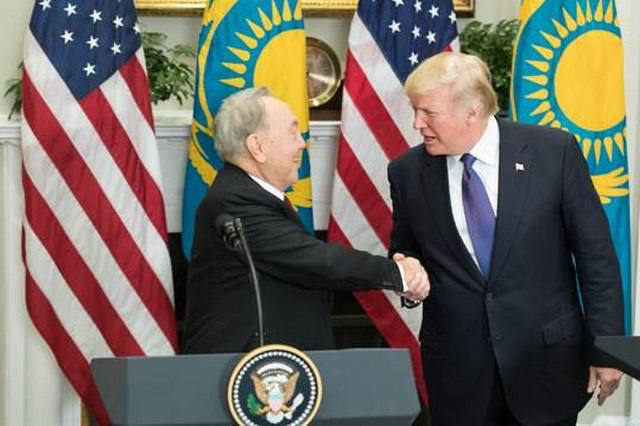
The first few weeks of President Trump’s second term have produced substantial changes to the foreign policy of the United States. Tariffs imposed on the US’s largest trading partners and the drastic cutting of funds for the United States Agency for International Development (USAID) have begun to build an American future that is more protectionist in nature. The change in posture has sparked hot debate in American discourse, but abroad, the debate is not so complicated. For Kazakhstan, Trump’s changes in foreign policy will go largely unfelt, if not celebrated.
Though the 25% tariffs on Canada and Mexico were delayed, the 10% tariff on all Chinese imports has gone into effect. In response, China placed a 10% tariff on American oil and a 15% duty on coal and natural gas. Actions like this signal the end of the long ceasefire in the PRC-US trade war. However, the trade war has not yet terrified Kazakhstan, a state that does not crack the top fifteen list of America’s trading partners. Kazakhstan, which is facing a 9% inflation rate and price hikes as much as 40% caused by rising fuel costs and predatory taxes, will largely escape the effects of a trade war as the state navigates its internal issues. Some Kazakhstani officials note that a US-China trade war could affect the distribution of the high-tech market or general consumer goods, though the Kazakhstani economy’s consumer habits do not suggest the trade war will be damaging.
Prior to closure, USAID’s website read regarding Kazakhstan, “(USAID) promotes the U.S. government’s Central Asia Strategy, which supports and strengthens the sovereignty and independence of Central Asian countries,” while also advancing “rule of law” and “respect for human rights.” To do so, USAID allocated $15.2 million to Kazakhstan in 2024, which was divided between government and NGO programs. This number kept Kazakhstan outside the top ten for most in USAID funding. For Kazakhstan, NGO’s have been affected more by the cuts than the government, but both hold a similar sentiment: if USAID funding cuts are felt, it will be felt in areas Kazakhstan is happy with. Mazhilis Deputy Magerram Magerramov claims USAID was using funding to promote LGBT activism in Kazakhstan, a movement Kazakhstan officials say was not internally generated. As stated by Kazakhstani political scientist, Gaziz Abishev, “(USAID) initiatives often come wrapped in an appealing narrative but ultimately serve as instruments of foreign influence – and, at times, pressure.” Generally, Kazakhstan views the cut in USAID funding as an opportunity to exercise increased political autonomy.
President Trump’s change in policy has generated questions around the void that will be left in Central Asia. Some experts claim China will assert more influence on the region through education programs; others say Russia’s USAID equivalent, Rossotrudnichestvo, may attempt to fill the void. Despite efforts to decrease and restructure USAID’s funding and objectives, American influence is unlikely to leave Central Asia entirely. The true state of the future remains unseen, but the second Trump-era has certainly changed the great game for the global powers involved in Central Asia.
 The Patterson Journal of International Affairs