By Madelyn Williams
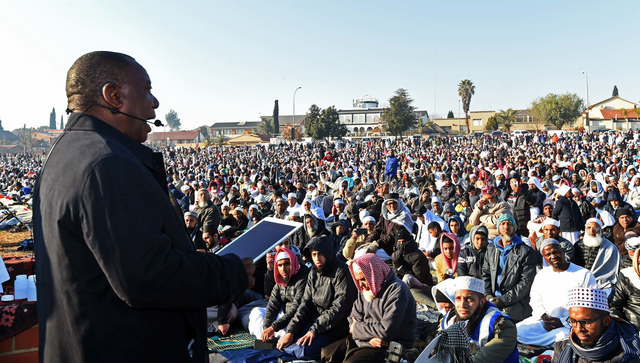
Last month the South African president, Cyril Ramaphosa, signed the Land Expropriation Law. This has caused a firestorm of controversy in South Africa and abroad as some expect that it will be used to remove white farmers from their land. The law provides guidelines about how land expropriation may be implemented and under what conditions. The statute applies to property that is not in use, has no plan for development, or poses a safety risk. Furthermore, the bill allows the government to seize land without compensation if an agreement with the owner cannot be reached. The president’s spokesperson asserted that the state “may not expropriate property arbitrarily or for a purpose other than… in the public interest”. The bill has undergone a five-year consultative process as well as an evaluation by a presidential panel to assess its effectiveness and legality. South Africa has yet to expropriate any land under this law.
Most current land polices have been around since South Africa was a British colony. The Natives Land Act of 1913 removed black Africans from the land and gave it to white Afrikaners. The new law replaces the pre-democratic Expropriation Act of 1975 which included a “willing seller, willing buyer” clause, meaning that both parties had to reach a consensus before a deal could be made. The most recent studies show that 72% of total farms and agricultural holdings are owned by Afrikaners, 15% multiracial, 5% Indian, 4% African, and 4% other. White Africans are only 7.3% of the population. People have been calling for land reforms for over 30 years, since the end of the apartheid regime in South Africa. This law is an effort to address the disparities of the past.
There is much contention in the South African government about the new law and many entities have sought protection in the courts. Among these, are members of the Democratic Alliance (DA), the second largest party in the Government of National Unity (GNU), who have said that they are consulting with lawyers to challenge the legality of the law. Some critics say that the law poses a threat to private ownership and is essentially an attack on white people in South Africa. This concern is not baseless considering that there are allegations that there has been a systemic targeting of violence against white farmers being carried out over the last several years. Critics also point to the collapse of Zimbabwe’s economy in the 2000s – directly after its government redistributed white Rhodesian land – as an example of potential disastrous effects.
This is not just a contentious has reached the shores of the United States. President Donald Trump has said that the South African government is treating certain citizens “very badly” and threatened to withdrawal future funding to South Africa. According to their President, Ramaphosa, this is meaningless since the US only provides South Africa with HIV/AIDS treatment through PEPFAR, but according to US governmental data in 2023, the amount was $440 million through a variety of programs. In addition to the withdrawal of aid, US Secretary of State Marco Rubio announced that he will not join the upcoming G20 talks in South Africa in protest of this new law. South Africa exports a variety of goods to the United States including platinum, gold, and cars; tensions between the countries could eventually affect their trade relationship, especially if the Trump administration places punitive economic sanctions against the country.
 The Patterson Journal of International Affairs
Leave a comment