By Lexi Dean
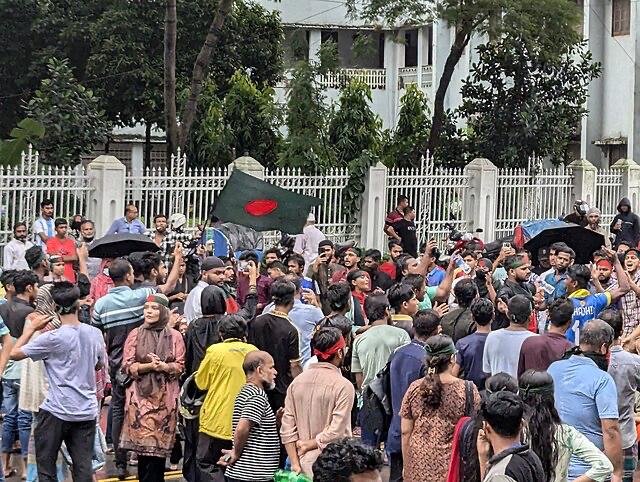
After student-led protests ousted former Prime Minister Sheikh Hasina last summer for corruption and human rights abuses, Hasina fled to India. Over 800 people were killed and 20,000 were injured by government authorities under Hasina in these uprisings. Last week Hasina gave a controversial speech from India attempting to discredit the July and August protests, critique the interim government as unlawfully taking power, and urge supporters to stand up against the interim government. In response, anti-Hasina groups stormed and destroyed the historic home of Hasina’s late father, Mujibar Rahman, who was the country’s independence leader. The house acted as a memorial museum to honor the country’s freedom. The mobs, however, saw the house as a symbol of authoritarian rule under the Awami League political party, corruption, and suppression of opposition voices. Since Wednesday, anti-Hasina groups have targeted Hasina supporters by vandalizing the houses of lawmakers, Cabinet members, and exiled leaders of the Awami League across the country.
The interim government, backed by the military, initially called the vandalism “regrettable” but that it was “public outrage” in response to Hasina’s controversial speech. Friday, the government showed deep concern about the vandalizing of institutions and establishments across the country, claiming it would contain the acts. Other political parties urged the interim government to emphasize law and order as to not ignite further chaos in the country. Amidst Hasina’s inflammatory words from India, Bangladesh urged India to stop Hasina from making further comments that would provoke further attacks and division in the country. India, which aided Bangladesh to gain independence from Pakistan, condemned the destruction of Rahman’s former house, as it represented the formation of the national identity and independence. The tension between Hasina’s presence in India and the violence gaining momentum in Bangladesh turns government officials to question India’s role in destabilizing the country and possibly obstructing a future path to democracy, according to a senior leader of the Bangladesh Nationalist Party.
 The Patterson Journal of International Affairs
Leave a comment