By Matthew Grace
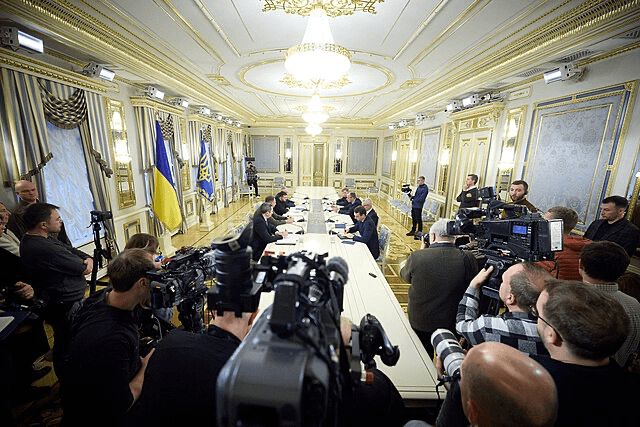
In September of 2024, then presidential candidate Donald Trump spoke to Ukrainian President Volodymyr Zelensky, claiming he could, “get it [the war] resolved very quickly”. This statement followed President Trump’s previous statements that he could, “get it settled before I become president” and “could end the war in 24 hours”. We are now over two months into the Trump administration and a ceasefire to Russia’s invasion of Ukraine remains slow in progress. Despite Trump’s one-on-one diplomacy and bilateral talks, it has not aided the two combatants, Zelensky and Putin, in coming to agreement terms. President Trump claims that his talks and phone calls have been “highly productive”. Yet, he has only managed to secure Russian President Vladimir Putin’s promise to cease Russian attacks on Ukrainian energy facilities, a promise broken within hours Ukraine claims. Putin himself has been the largest obstacle in ending the conflict as he has made clear he does not want to be rushed in any decision making. He has opposed the US two-state strategy of establishing an interim ceasefire before negotiating a longer-term settlement. Putin instead pushed for addressing the “root causes of the war” which he claimed are NATO expansion and Ukraine’s sovereignty.
The Trump administration’s targeting of Zelensky during negotiations has failed to deliver any of the desired ceasefire terms by the United States, especially during “the now infamous confrontation in the Oval Office”. Other ceasefire offers made by Ukraine such as an air and sea interim ceasefire and a complicated offer by the United States to include a 1200km front line in the east, have all been rejected by Putin. Under the Trump administration, the United States is now focused on the economic benefits of a ceasefire which complicates and distracts from an immediate ceasefire to end the fighting. Trump’s framework to give US firms access to Ukrainian critical minerals has been seen as the “US investing in Ukraine’s future” or as “extorting the country’s natural resources”. Zelensky agreed to these terms under the condition the United States provide security guarantees, which was refused. The bilateral body by which the ceasefire negotiations have been carried out dramatically slows diplomatic understandings and agreements. Both sides use the United States for shuttle diplomacy which takes time. Despite the prolonged negotiations, continued combat, and Russia occupying 20% of Ukraine, Ukrainians maintain resolve and hope for favorable terms for an end to the invasion and future reconstruction efforts.
 The Patterson Journal of International Affairs
Leave a comment