By Abby Bedard
On Saturday, US and Iranian officials convened in Muscat, Oman for negotiations surrounding Iran’s nuclear program. The talks were headed by Donald Trump’s Middle East envoy, Steve Witkoff, and Iranian Foreign Minister, Abbas Araghchi. These are the first negotiations dealing directly with Iran’s nuclear program since Trump’s return to office.
The talks were mediated by Omani Foreign Minister, Badr al-Busaidi. Most of the negotiations took place with the teams in separate rooms; however, the Iranian Ministry of Foreign Affairs reported that the chief negotiators “spoke for several minutes in the presence of the Omani Foreign Minister while leaving the negotiations venue”. The ministry also shared that the talks were conducted in a “constructive atmosphere and based on mutual respect”.
The lead up to the meeting was tense, with the US team insisting on direct, face to face negotiations, while the Iranian team asserted that they must be indirect. Trump made his wishes quite clear before the meeting began, telling reporters aboard Air Force One, “I want them not to have a nuclear weapon. I want Iran to be a wonderful, great, happy country, but they can’t have a nuclear weapon”. The Trump administration once again issued ominous threats, stating that Iran will face “great danger” if a deal is not reached. White House Press Secretary, Karoline Leavitt stated that there will be “all hell to pay” if Trump’s demands are not met.
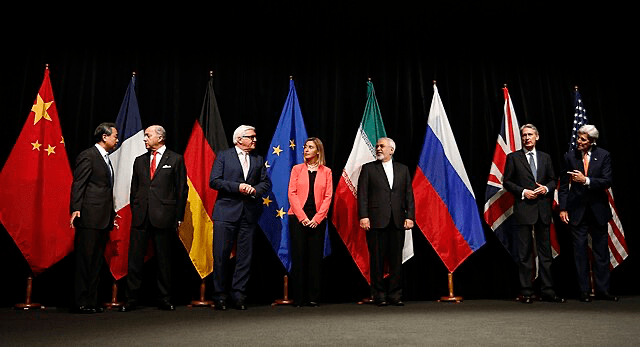
During his previous term, Trump pulled out of the Joint Comprehensive Plan of Action (JCPOA) or Iran nuclear deal, which aimed to limit Iran’s nuclear program. Though the deal was defended by Britain, China, France, Germany, Russia and the European Union, Trump claimed that it gave Iran too much, and the US got too little in return. This history between the two makes reaching a deal even more uncertain. Back in March, the Trump administration sent a letter to Iranian leadership, proposing negotiations on the matter, Iranian Supreme Leader Ayatollah Ali Khamenei responded unfavorably, stating, “We negotiated for years, reached a complete and signed agreement, and then this individual tore it up,” Khamanei said. “How can one negotiate under such circumstances? … When we know they won’t, what is the point of negotiating?”
Despite historical grievances, and bluster from leadership on both sides, some experts believe that Iran’s current geopolitical position could spell success. Iran’s proxies in the region, namely Hezbollah and Hamas, have seen devastating losses at the hands of Israeli forces. Additionally, US forces have recently begun targeting Iran-backed Houthi militants in Yemen. Perhaps most pertinent to these negotiations, were the Israeli strikes carried out in October 2024, which are believed to have struck facilities linked to Tehran’s nuclear and ballistic missile programs. With the delegates from the United States and Iran agreeing to hold more talks next week, it remains to be seen if the two rivals can find common ground.
 The Patterson Journal of International Affairs
Leave a comment