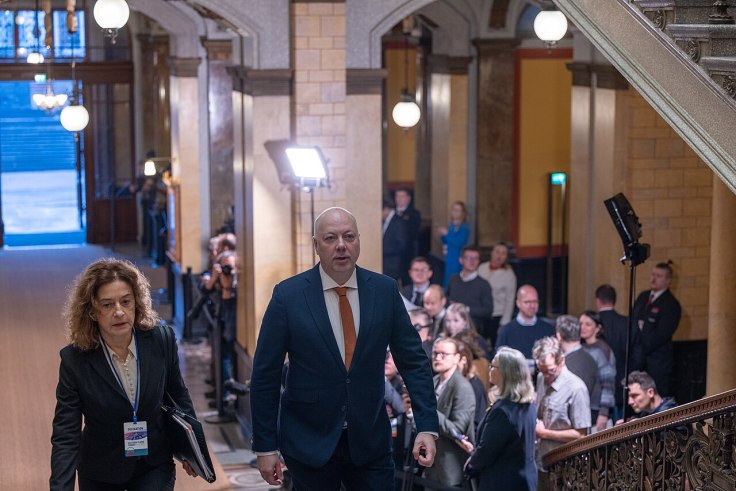
FinnishGovernment, CC BY 4.0 https://creativecommons.org/licenses/by/4.0, via Wikimedia Commons

By Ionut Moga
Bulgaria is scheduled to hold snap Parliamentary elections on April 19th. These elections are scheduled as a result of massive anti-corruption demonstrations, which led to the resignation of Rosen Zhelyazkov’s government, a member of the Citizens for European Development of Bulgaria, also known as GERB, which is one of the major parties in Bulgaria. The other major parties in Bulgaria worth noting are Progressive Bulgaria (PB), We Continue the Change-Democratic Bulgaria (PP-DB), Movement for Rights and Freedoms, and Vuzrazhdane. In regards to the polling among these parties, there are three parties that are expected to get over 10% of the vote, which are PB, GERB, and the PP-DB, with projected vote totals of 29.4%, 20.7%, and 11.5%, respectively. Movement for Rights and Freedoms and Vuzrazhdane are expected to get under 10% of the vote, but still enter Parliament. There are concerns with these polling results, though. The leader of the PB is Rumen Radev, who is a former President of Bulgaria who resigned in January 2026 in the aftermath of the anti-corruption demonstrations. He positioned himself and his party as an anti-corrupt party, but he was criticized by rival parties who are pro EU that he was sympathetic to Moscow, especially when it came to foreign aid in Ukraine. He said that he is anti-military aid to Ukraine, and he also said that Ukraine would not win the war against Russia, thus concluding that aid would not be useful whatsoever.
The stakes in the Bulgarian election could not be higher. Bulgaria is the only country in the EU to have had this much political instability within the last several years, which is evidenced by the fact that this election is the sixth parliamentary election since 2021. No other EU country in Eastern Europe has had as many Parliamentary elections during this span of approximately 5 years. With this kind of instability, there is likely to be prevalent corruption in Bulgarian society. On March 26th, dozens were arrested in a police crackdown against vote-buying. This comes from the fact that in this election cycle alone in Bulgaria, there has been an increase in electoral law violations by 500-600 percent in comparison to the last Parliamentary elections, which took place in October 2024. According to the current Interior Minister of the Country, the reason behind these arrests was obviously the increased corruption in Bulgarian society, but the other reason is that the Bulgarian police system is performing better in identifying potential corruption and arresting the individuals involved.
The one thing that should give hope that the situation will improve in Bulgaria is that the voters are more energetic about the opportunity to cast their ballot. According to the Bulgarian News Agency, 59% of voters will show up for these elections, which is around 3 million people, which is an increase of approximately 500,000 people in comparison to the October 2024 elections, in which only 2.5 million people showed up to the polls. This is important to know since a pillar of democratic elections is voter turnout, and increasing voter turnout indicates that change in Bulgarian society is a possibility. I may not agree with the way Bulgarians are planning to vote because of how Rumen Radev and PB see the war between Ukraine and Russia, but Bulgarian citizens are the ones who must decide their future, and high voter turnout is a signal that the democratic system in Bulgaria is working.
 The Patterson Journal of International Affairs
Leave a comment