By Matthew Grace
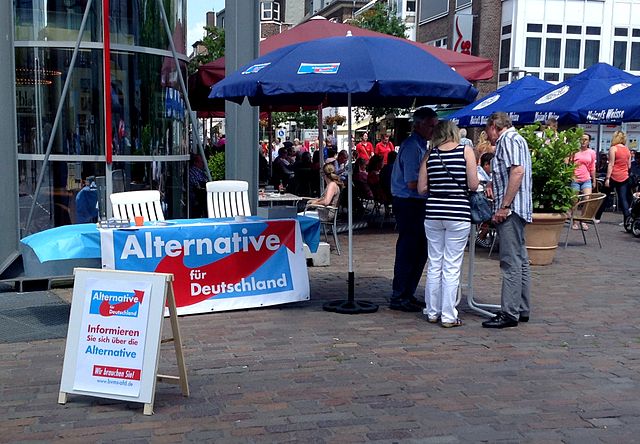
Alternative fur Deutschland (AfD)
The far-right Alternative fur Deutschland (AfD) party has won two state elections in the East German states of Thuringia and Saxony. This far-right sweep has not been seen in Germany since the end of the Second World War after the collapse of fascism. On Sunday, September 2nd, the AfD won 32.8% of the parliamentary seats in Thuringia and 30% in Saxony, adding to the uncertainty of Europe’s political leaning regarding the rightward shift in politics felt throughout.
The AfD has campaigned as a nationalist party with anti-asylum and immigrant, green policy and military aid to Ukraine concerns that have garnered greater support from Germany’s younger population. Although the party is only eleven years old, it gained prominence in 2018 after Germany’s then Chancellor, Angela Merkel “accepted more than a million migrants from war-torn countries in the Middle East”. The AfD’s platforms center on unchecked migration, a “frustration which peaked last month when a Syrian man (…supposedly deported months prior) stabbed to death three people and injured several others”. This platform espouses hateful and fearful rhetoric which harkens back to Germany’s fascist past and has placed the AfD under domestic surveillance because of its threat to the German constitution. Although the AfD has swelled its numbers in the respective parliaments, they may face many obstacles as no other party has desired to collaborate in government.
This potential obstacle, however, does not prevent the party from blocking decisions that require a 2/3rds vote and the appointment of judges and top security officials. The AfD’s success in Thuringia and Saxony harkens to Italy, Finland, Slovakia, Hungary, Croatia, and the Czech Republic’s recent ascendancy of far-right governments and may be an indicator of Germany’s future politics.
 The Patterson Journal of International Affairs
Leave a comment