By William Crawford
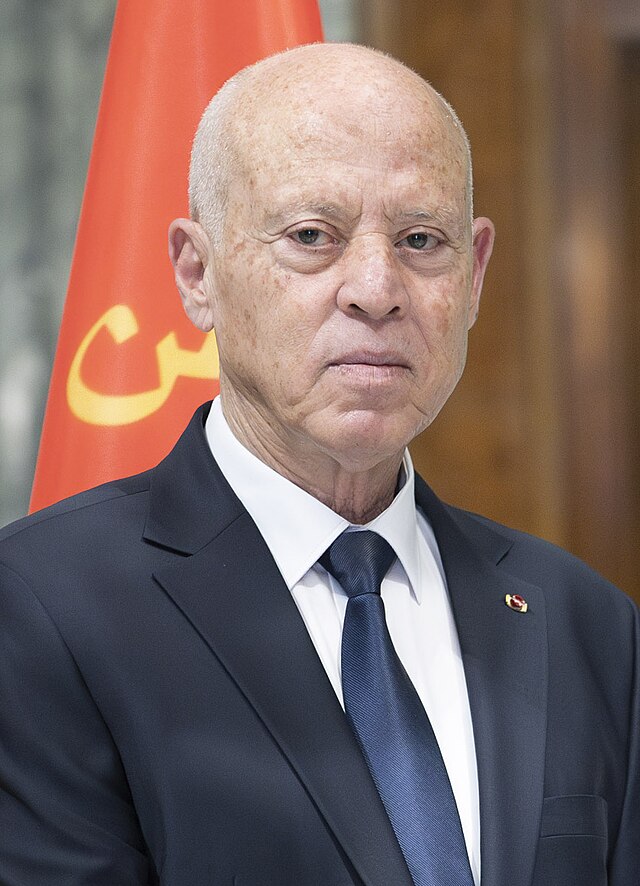
President Kais Saied
Only two electoral challengers to current Tunisian President Kais Saied have been approved to run in Tunisia’s elections in October. The decision to allow just two challengers, made by the country’s electoral authorities, comes in direct opposition to a decision by the highest administrative court in Tunisia, which ruled that three other candidates needed to have their candidacy reinstated. The ruling was rejected by the electoral authorities, stating that the decision was not received within legal deadlines. The electoral authorities also cited lack of endorsements and failures to meet financial deposits as reasons to continue preventing candidacies. One of the two challengers who were approved, Ayachi Zammel, was later arrested under allegation of falsifying signatures of registered voters.
These recent acts are part of a trend of democratic backsliding within Tunisia. Once considered the most stable and encouraging democracy in the region, Tunisia has struggled to maintain its transition to democracy. The initial starting point of the Arab Spring, economic mismanagement and deprivation has largely eroded the democracy in Tunisia. President Kais Saied remains largely popular within the country, despite his authoritarian policies. Taking advantage of Tunisian frustrations with their democratic experiments seeming inability to improve living standards, President Saied has overseen a number of non-democratic reforms since he initials took office in 2019 which have served to strengthen his hold on political power. Recent political exclusions and arrest are a few of many steps in a creeping nondemocratic movement inside of Tunisia.
 The Patterson Journal of International Affairs
Leave a comment