By: Madelyn Williams
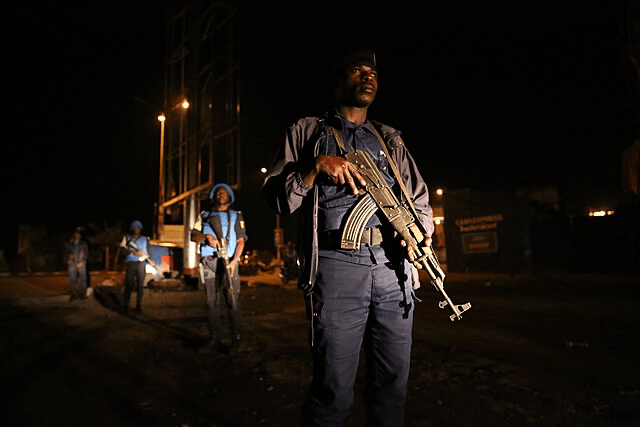
In recent weeks, the Tutsi-led M23 rebels have advanced towards Goma in the eastern Democratic Republic of Congo (DRC), near the Rwandan border, finally entering the city on January 26th. Within two days, by January 28th, the rebels had captured most of the city including the airport. The DRC claimed that they had retained control, but reports on the ground indicate that by the 29th there were only pockets of resistance remaining. The Congolese forces were joined by the Southern African Deployment Community, which itself was composed of troops from 16 countries and the UN mission to the DRC (MONUSCO). Despite their efforts, M23 has taken the city and has forced approximately 400,000 civilians to flee. Many Congolese troops have already surrendered their weapons to UN peacekeeping forces. The UN reports that there have been at least 2,800 injured and over 700 killed and expects these casualties to rise.
This is not the first time M23 has attacked Goma. In 2012, M23 took Goma, claiming that they were seeking justice by tracking down Hutus responsible for the Rwandan Genocide (having fled to the region after being ousted from power) but were ultimately, pushed out by Congolese and UN forces. The region has seen much conflict for several decades due to its vast mineral deposits and Goma serves as its central trading and transport. The city also serves as a base for the UN and global health organizations.
Many intelligence reports claim that Rwanda is backing M23 and perhaps are using the fighting as cover to loot Congolese minerals. However, the Rwandan government adamantly denies these claims. They have deployed troops along its border to keep the fighting from spilling onto their soil. The UN warned that this invasion could start a humanitarian crisis due to resource shortages like water, food, and electricity. Protests regarding the DRC’s inability to stop the rebels broke out in Kinshasa, targeting the French, Kenyan, and Ugandan embassies. At an emergency UN meeting the DRC demanded sanctions against Rwanda as crossing the border is an act of war. The UN condemned the actions of the M23 saying it violates sovereignty and territorial integrity. Though Rwanda claims to have no connection to M23, Rwanda’s regional ambassador stated that unless negotiations can be reached the armed group will not stop at Goma but will continue into South Kivu toward Bukavu. The M23 rebels announced that they would continue this march all the way to Kinshasa. These events are still evolving, with the potential for significant changes at any moment.
 The Patterson Journal of International Affairs
Thank you for your contribution. President Tshisekedi has changed the narrative about Rwanda and exposed the deliberate blindness of Western countries. The West has strategically supported dictators in Africa despite the devastating loss of millions of lives—and Kagame stands as a clear example among many over the years.
This represents a crime against humanity and willful neglect, despite numerous reports from well-respected organizations like the UN and various intelligence sources. This issue extends beyond concerns about genocide, a threat to the Tutsi population, FDLR, or Rwanda’s security. It reflects the international community’s complete disregard for human lives in pursuit of profit and the exploitation of a country whose people have faced marginalization for decades. Kagame receives support from several nations, including the USA, yet this situation continues without intervention.
Congo has suffered immense human casualties. It is a fact that one need not be an ideologist to recognize this carnage. Congo must strengthen its migration laws and secure its borders. Additionally, the Congolese government needs proper tools and resources to train and fortify its army for self-defense. Rwanda should be punished through sanctions, a freeze of aid, and any sponsorship. Kagame has been in power for thirty years and kills within and outside of his country on the watchful eye of all democratic and free countries.
After rebuilding itself under multiple challenges, including mass displacement and people fleeing to refugee camps in neighboring countries, Goma is not safe and has now lost more than 3,000 people in three days—adding to the over 6 million lives lost since 1994.
LikeLike