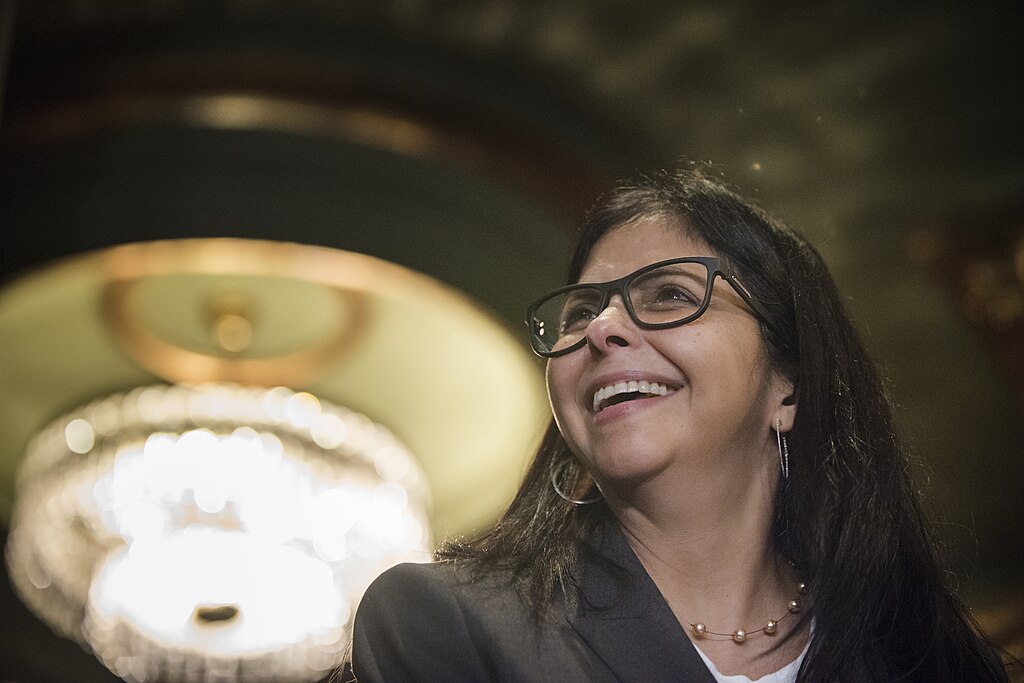
Eneas De Troya, CC BY 2.0 https://creativecommons.org/licenses/by/2.0, via Wikimedia Commons
By Jack Kolesar
Venezuela is currently in a prolonged state of profound uncertainty amid a series of events and crises over the past several years. Over a decade of economic collapse, hyperinflation, and chronic shortages have left its people struggling to meet basic needs. Currently, the United Nations estimates 7.9 million Venezuelans, over a quarter of the population, are in need of urgent humanitarian aid. This has occurred in tandem with Venezuela’s political crisis that has increasingly drawn international attention. The situation reached its climax on January 3, 2026, in Caracas when the United States conducted a special operation that arrested Venezuela’s long-time leader, President Nicolás Maduro. Maduro was then taken into American custody due to his alleged involvement in weapons and narcotics crimes. While this operation was not followed by armed conflict, it has certainly added a new layer of volatility to an already fragile state. What has followed this bold move by Washington is Venezuela’s attempt to function without a clear view of what is next for it, along with its strained institutions and citizens facing a humanitarian crisis.
On the ground, the political landscape remains unusual and uncertain. Longtime Maduro regime loyalist and former vice president Delcy Rodríguez has succeeded Maduro, now acting as interim president. Despite being part of the same regime as Maduro himself, she is currently attempting to retain control over a fractured and failing state under the watchful eye of the Trump administration in Washington. Reports describe her as acting “under U.S. oversight,” especially with decisions relating to amnesty, Venezuelan oil, and the transition process. Consequently, Caracas, in an abrupt shift after decades of tension with Washington, has publicly signaled a willingness to work with the United States. On the other hand, however, Rodríguez still maintains Maduro as the legitimate leader of Venezuela, condemning Washington’s January operation. This strange political tightrope that Rodríguez must walk between domestic and diplomatic expectations further complicates the situation on the ground in Venezuela. With deep ties to Venezuela’s Chavista movement, named for Maduro’s socialist predecessor Hugo Chavez, the ability of Rodríguez to lead a transition away from the previous dictatorship is questionable.
With Maduro in custody, the Trump administration envisions a new Venezuela. This will include a rapid restructuring of state institutions, including the military, away from the norms of the nearly three decades of socialist rule. Additionally, the United States has signaled support for democratization in Venezuela, platforming some of Maduro’s opposition amid the state’s newfound political openings, though it still recognizes Rodríguez as interim president. Furthermore, the foreign relations of Venezuela are a priority to Washington amid the Trump administration’s “Donroe Doctrine.” This is a 21st century renewal of the Monroe Doctrine, asserting the United States as the hegemonic power in its hemisphere. Under Chavista leaders, Venezuela formed strong partnerships with American adversaries such as Cuba, China, Russia, and Iran. These relationships have involved trade, energy, and military cooperation. Now, with
new leadership in Caracas, Washington seeks to pull Venezuela into its sphere of influence once again. Overall, though Rodríguez’s Chavista government remains in power, Venezuela is now subject to the direction of the United States.
Oil, the backbone of Venezuela’s economy, is the most valuable variable at play in Venezuela’s ongoing uncertainty. Though it has the largest crude oil reserves in the world, Venezuelan oil has been largely underutilized and undersold due to the breadth of sanctions upon the state from the United States and its allies. Therefore, using its new influence in Caracas, Washington is seeking new control mechanisms over this valuable resource. In 2026’s turbulence, Venezuelan oil tankers have been seized or redirected, while the interim government attempts to reassert control over oil production and negotiate sales under international oversight. Under this oversight, Venezuelan oil sales have shifted from its former partners, such as China and Cuba, to American-approved partners beyond itself, like Israel and the European Union. These drastic shifts come amid warnings that the country’s economic and humanitarian situation remains fragile, with triple‑digit inflation and a sharply depreciating currency.
Another important dimension of the on-the-ground situation in Venezuela is its humanitarian crisis. Conditions remain dire due to shortages of food, medicine, and essential services. As a result, aid agencies are operating under immense strains to alleviate Venezuela citizens’ plummeting quality of life. Additionally, these longstanding, ongoing crises have been compounded by other disasters such as landslides, floods, and mass emigration. Altogether, as Rodríguez takes the reins of power under Washington’s watch, the humanitarian crisis is an imminent issue in Venezuela.
The current situation in Venezuela appears to be fragile and uncertain. What comes next is anyone’s guess. Venezuela may shift towards order and democratic prosperity if institutions stabilize and international support is coordinated. On the other hand, there is a possibility for chaos if political fragmentation widens or competing foreign actors become heavily involved. It is evident that Maduro-aligned Venezuelans still hold the power in Caracas, but the shadow of Washington has the ability to bring about a drastic transformation in Venezuela.
 The Patterson Journal of International Affairs
Leave a comment