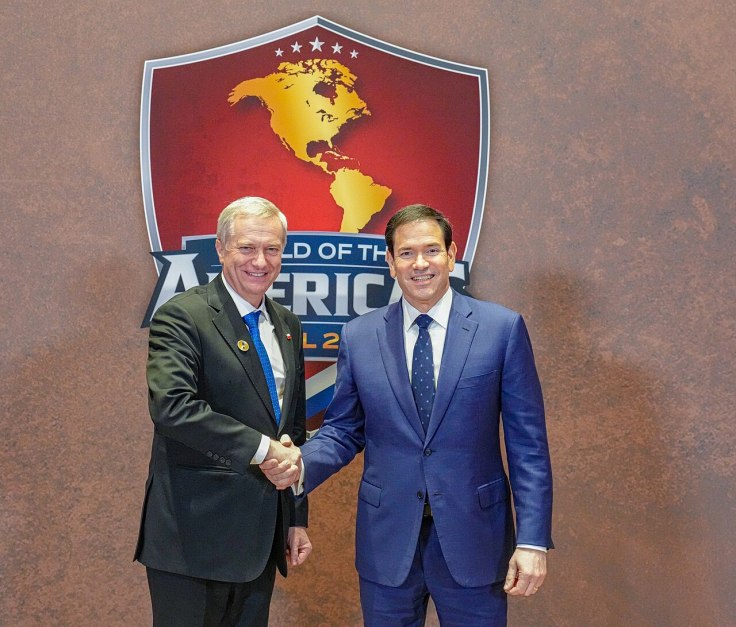
U.S. Department of State, Public domain, via Wikimedia Commons

By Jack Kolesar
In the wake of his 2026 inauguration, Chile’s new head of state, President José Antonio Kast, has moved forward on a central pledge of his presidential campaign. Kast’s “Border Shield,” a network of border security infrastructure, is now under construction. This initiative seeks to tackle border security issues highlighted by Kast, the founder of Chile’s right-wing Republican Party, such as illegal immigration, transnational crime, and various forms of trafficking. The plan for such security infrastructure is focused on Chile’s north on its borders with Peru and Bolivia. Kast’s plan, though not new, is a step away from the otherwise physically open borders in the region.
This “Border Shield” initiative is not merely a wall, but instead a comprehensive approach to curbing illegal crossings into Chile. The infrastructure plan aims to commit 3,000 law enforcement and military personnel to the border, in addition to walls, trenches, watchtowers, fences, and sensors. Construction efforts are initially concentrated near the Chilean-Peruvian Chacalluta crossing, where military units commenced excavation of extensive trenches to impede unauthorized crossings. These robust physical measures are intended to be complemented by drones, thermal imaging, and increased patrol presence across strategically vulnerable areas in Northern Chile’s border regions.
This new border policy emerges in the context of significant internal and external pressures that have been a rallying point for Chile’s right in recent years. It has experienced a notable influx of migrants, mostly from Venezuela, as well as Peru, Colombia, Haiti, and Bolivia. From 2015 to 2024, Chile’s foreign-born population rose from 600,000 to over 1.5 million, with over 300,000 of the current figure being undocumented migrants from Venezuela. This has created a noticeable strain on public services, which, when paired with a rise in crime throughout Chile across all demographics, has garnered calls against further immigration. Proponents of Kast’s project argue that it is a necessary assertion of state sovereignty and public security, aligning with broader global trends toward more restrictive border governance, a key shared trait in Kast’s allyship with the Trump administration. Overall, it is evident that due to strained services and worries about transnational crime, Chileans likely cast their ballots for Kast with his border policy in mind.
Nevertheless, the project has also generated substantial criticism within Chile. Its opponents contend that the policy may be symbolic and a projection of current global right-wing policy trends. This is further argued through evidence that migration flows had begun to decline
prior to its implementation. Furthermore, humanitarian and human rights organizations have raised concerns regarding the implications for asylum seekers, as well as noting the risks associated with militarized borders in remote desert regions where access to assistance is limited. Lastly, many in Chile’s opposition have noted the potentially damaging impacts the project may have on relationships with Peru and Bolivia. Altogether, while there is certainly a domestic
backing for these policies, the voting bloc that backed pro-immigration former president Gabriel Boric has maintained its opposition to these initiatives in Northern Chile. In sum, the Kast administration’s border fortification initiative represents not just an infrastructural border project, but a broader political moment. Its long-term efficacy and its domestic and international implications for regional migration, governance, and diplomacy remain uncertain, but will likely play a defining role in Chile’s policy trajectory in the coming years under its revamped right-wing leadership.
 The Patterson Journal of International Affairs
Leave a comment