By: John W. Parks
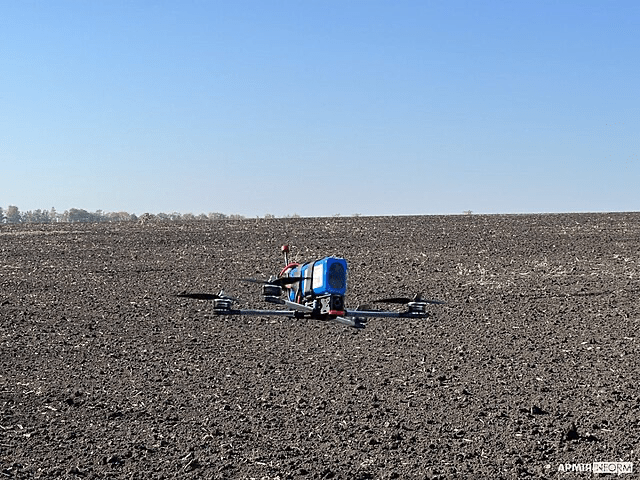
Following recent industrial trends, China has begun the expansion of an innovative market into the Central Asian region. Kazakh Invest, a nationalized investment company of Kazakhstan, signed agreements with two Chinese drone producers to build manufacturing hubs in the Almaty region of Kazakhstan. As of January 2025, Yesil Technology Company and Polyking New Horizons Technology Industry Co. Ltd have entered into agreements that are expected to expand the low-altitude technology market in China and Central Asia.
The low-altitude economy seeks to capture the untapped 1000 meters above the ground by using drones and unmanned aerial vehicles (UAV) in agriculture, construction, logistics, transportation, and many other sectors of the economy. This technological development, led primarily by Chinese companies, is expected to grow to 1.5 trillion Yuan by the end of this year and potentially to 3.5 trillion Yuan by 2035. The growth of this market is tied reciprocally with the growth of intelligent manufacturing and smart-city initiatives that will expand the physical infrastructure for a low-altitude economy. Yesil Technology and Polyking are just two of the over 19,000 Chinese drone companies capitalizing on the low-altitude revolution.
However, the low-altitude economy is not limited by Chinese borders. In mid-January, it was announced that Yesil Technology plans to build a 50,000-square-meter manufacturing center in Kazakhstan. A battery facility, research center, storage centers, and aviation testing stations will accompany the project which plans to distribute finished products to China, Kazakhstan, and neighboring Central Asian states. Representatives from Kazakhstan consider the $12 million investment as an opportunity to grow and diversify the Kazakh economy. This development expanded further on January 24, 2025, when Kazakh Invest signed another agreement with Polyking New Horizons Technology Industry Co. Ltd., welcoming plans of an industrial park to be built in Kazakhstan. This $200 million investment includes plans for expansion in chemical manufacturing and intelligent manufacturing systems, as well as low-altitude technologies. The combined Yesil Technology and Polyking agreements will bring and expected 1,500 jobs to Kazakhstan and likely transform the Central Asian state into a technological hub.
As drones become increasingly reliable and useful, the industry joins more traditional sectors like railroads and telecommunications as part of a clear Chinese strategy to expand influence in Central Asia. Like the traditional sectors of the economy, low-altitude expansion is welcomed by the Central Asian states. Low-altitude technologies could generate as many security implications as practical uses as it expands with China’s global influence, but for now, this revolutionary technology ushers in futuristic successes for a region seeking to better participate in a globalized world.
 The Patterson Journal of International Affairs
Leave a comment